How I price creative work without hating myself
Day rates punish speed, value pricing rewards theatre. After twelve years I landed on something simpler: price the decision, not the hours.

Marlo Vane
Chronicle Studio
Nobody teaches you pricing. You graduate knowing kerning and nothing about the moment a founder asks what does something like this cost? and your mouth goes dry. Twelve years in, here's the system that finally stopped the dread.
Why the standard models chafe
Hourly billing punishes you for getting good — the faster you are, the less you earn. Pure value pricing sounds right in the podcast and collapses in the meeting, because computing the lifetime value of a rebrand is astrology with spreadsheets. Both models make the conversation about you — your hours, your worth — when it should be about the decision the client is buying.
Price the decision
Every engagement I take is one of three decisions, and each has a floor:
- Direction — which way should this brand or product point? Workshops, strategy, one loud recommendation.
- Definition — what exactly are we making? Identity systems, design systems, the site architecture.
- Delivery — make it real and ship it. Design plus build, end to end.
Clients pick the decision they need; the price is attached to the decision, not the hours behind it. Scope talks get shorter because we're negotiating meaning, not minutes.
A price is a claim about consequences. Charge for what the work changes, not for what it takes out of you.
The three rules that hold it together
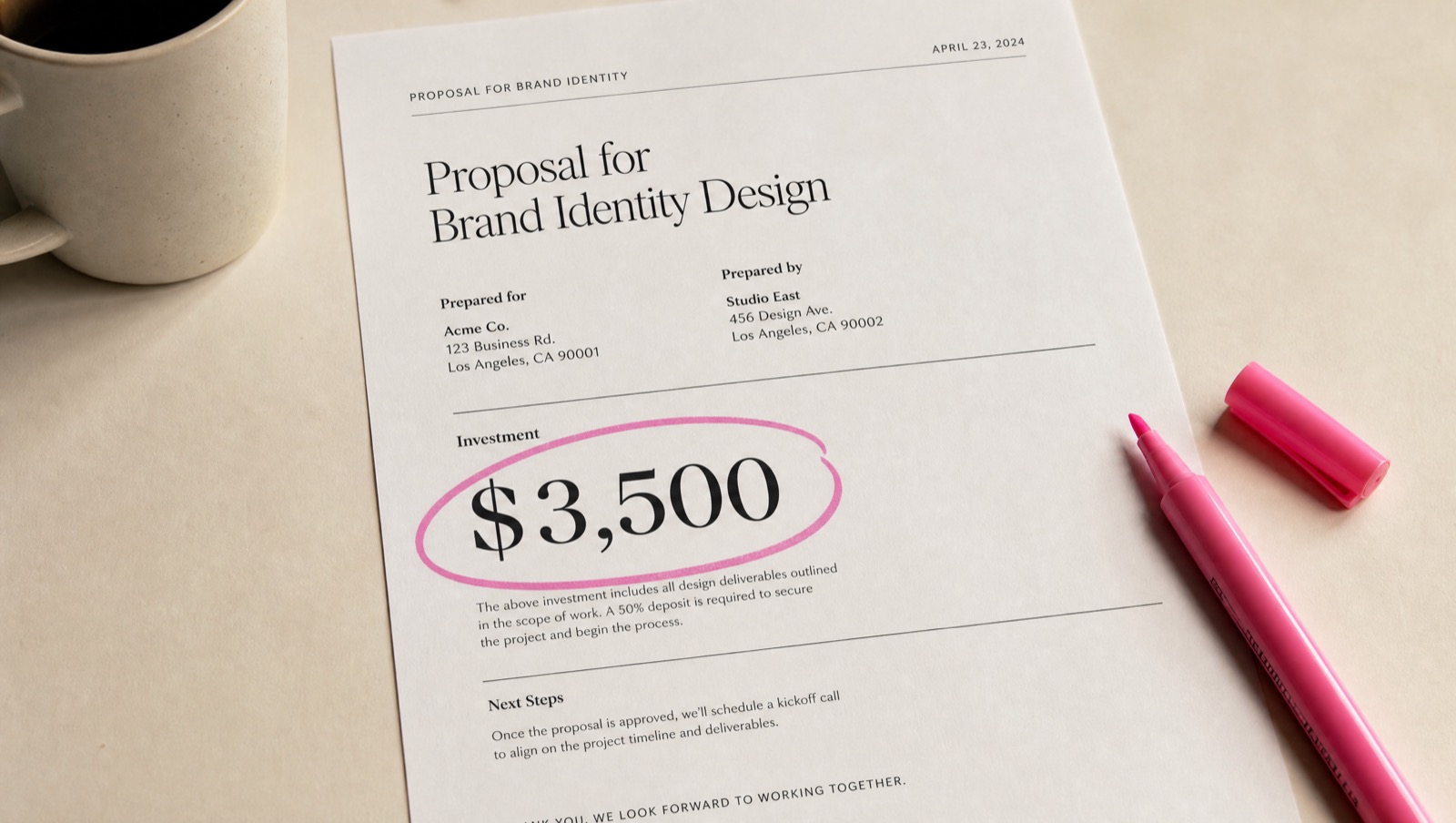
First: never price in the room. Enthusiasm is a discount you pay for later. Second: every proposal has exactly one number — options create haggling, one number creates a yes or a useful no. Third: raise the floor every third project. If nobody has winced in six months, you're subsidising someone's Series A.
I still get the dry mouth sometimes. But now it's before the email, not before the invoice.
Enjoyed this? There's more where it came from — read the journal or start a project.